The inventio
Santiago was not a city in which the Cathedral was built. It was the construction of the Cathedral that resulted in the birth of the medieval city, which, like all medieval cities, emerged in a chaotic manner and without any urban planning.
Tradition tells us that in the 9th century (around the 820-830 AD), the hermit Paio discovered in the Libredón forest -site of the current Cathedral- the tomb of the Apostle Santiago, who had been buried there in the 1st century by Athanasius and Theodore, his disciples.
The only historical information we have about the death of Santiago dates back to the year 44 AD, and it is recorded in the Bible, in the book of the Acts of the Apostles. It positions Santiago, one of the 12 apostles of Jesus Christ, in Jerusalem, where he had gone to celebrate Easter with his Christian brothers. There, King Herod Agrippa ordered him to be beheaded for being unfaithful to the Jewish religion.
Tradition explains that Athanasius and Theodore, who had accompanied him in previous years on his travels to this land, collected his remains and embarked, bringing him to be buried in what had been the place of his apostolic mission: the Iberian Peninsula.
The sea route takes them to the coasts of Gallaecia. They happened to stop at a small Roman settlement called Asseconia. They find a free mausoleum there, ask for permission and bury the Apostle. Not only that, but they started to venerate him after that. He was one of the twelve apostles of Jesus Christ!
But the area was attacked by the Germanic peoples, causing the fall of the Roman Empire. So Asseconia ceased to exist, the veneration of the tomb of the Apostle ceased too, and the region was depopulated.
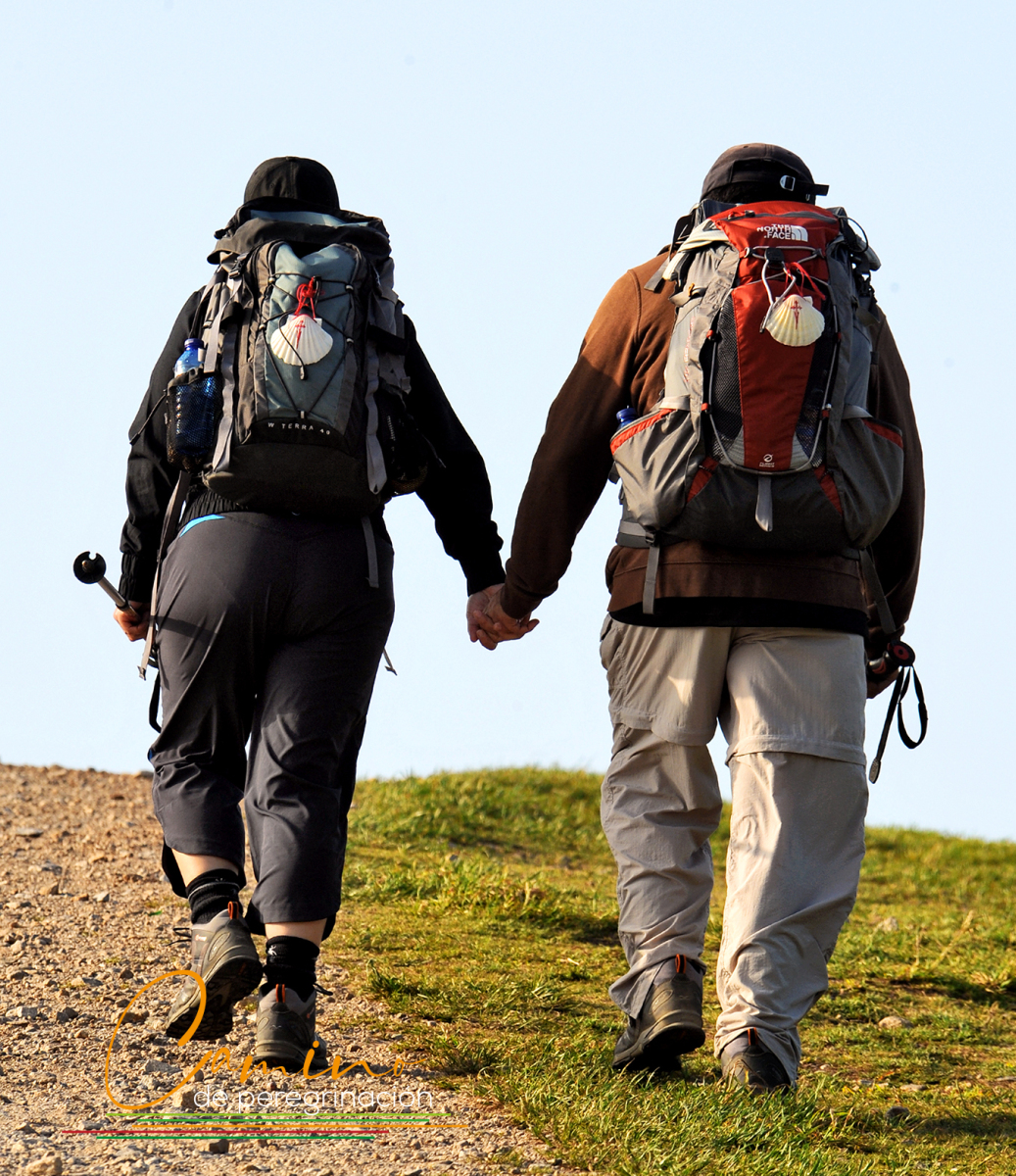
It was the hermit Paio who discovered it again in the 9th century -as we have mentioned before- and informed the bishop of the area, Teodomiro. He sent the news to the only Christian king of the time: King Alfonso II the Chaste -note the Peninsula was occupied by the Muslims-. Tradition says the king, with his family and close associates of the court, came to Santiago, becoming the first pilgrim in history and also inaugurating the first road: the Camino Primitivo, from Oviedo to Santiago.
Both bishop and king, upon entering the mausoleum, and seeing what they find there, certify that it is the remembered tomb of the Apostle Santiago. Therefore, the king ordered the construction of a church, which included the mausoleum inside. In just 50 years, the space of this church became limited, so Alfonso III the Great, ordered the construction of a second, larger church.
1075, construction starting year
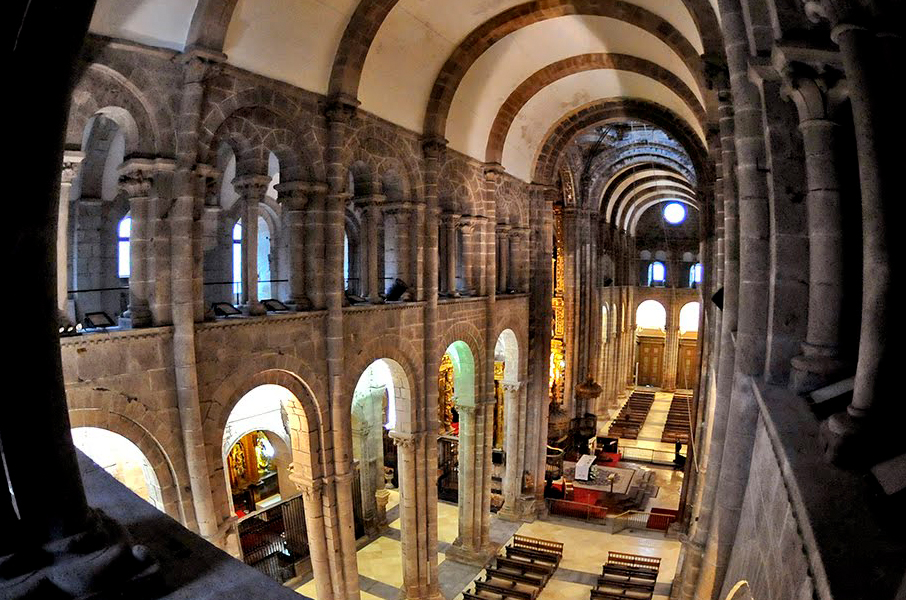
It was in 1075 when they began to build the Romanesque Cathedral. It took 136 years to build it, and it was consecrated in 1211. Then, some of the pilgrims who arrived in Santiago decided to stay and live there. Master stonemasons and builders with their families decided to say too, joining merchants, craftsmen, religious people… All of them settled around the Cathedral, giving rise to a town that would later take the name of Santiago de Compostela.
For being Romanesque, the Cathedral of Santiago is very large, very high, very bright… The pilgrims who arrived in medieval times were amazed to see the largest Cathedral that was built in the 13th century on the Iberian Peninsula. Quite a spectacle for their eyes! Despite being constructed in the Romanesque architectural style, the Cathedral is perceived as Baroque from the outside.
From the mid-16th century onwards, when the cathedral was already very deteriorated and out of fashion, its facades and towers were restored in all its Baroque splendour… There had been two hundred years of exterior changes, except for the south facade – at the Puerta de Platerías – where the Baroque did not make any changes. Without destroying the existing structure, the Baroque fused with the Romanesque has achieved an even more slender and spectacular Cathedral.